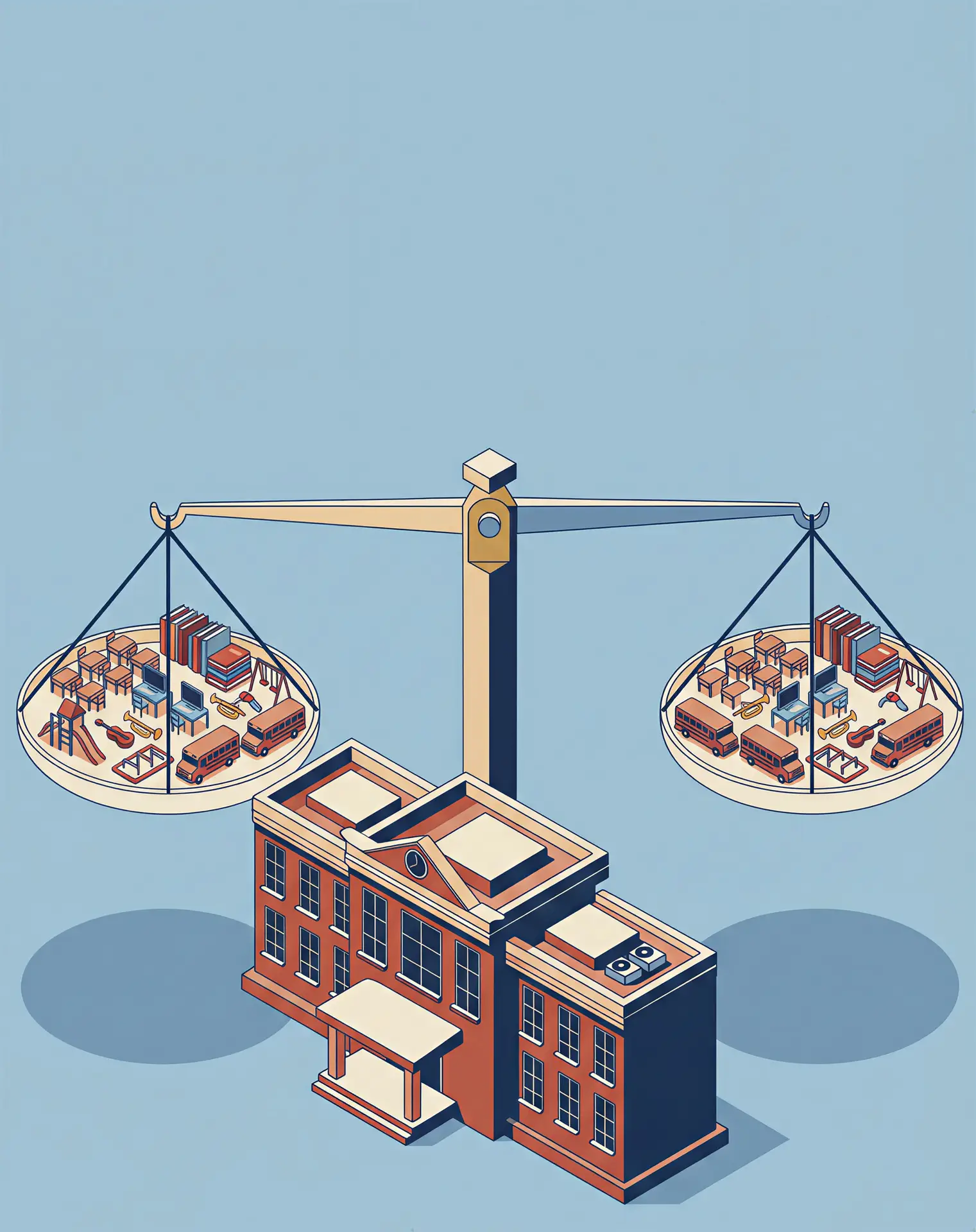
Washington State is seeking to reimagine how K–12 schools are funded, BESR is apart of the conversation.
Article IX of Washington State’s constitution makes educating every child the state’s “paramount duty,” without distinction or preference on account of race, color, caste, or sex. The school funding system built beneath that promise has never honored it.Â
From the territorial era of what would become Washington State forward, the state tied school funding to local property wealth. That funding structure tracked who settled where and who owned what. Decades of lawsuits, including McCleary, forced more dollars into the system, but did not change its shape. The state still distributes by property and enrollment, with almost no weight for need or historical disparities in a state where wealth was never held evenly by race. The result is predictable, and the state’s own data shows it. Â One of the foremost barriers to the Black student systemic educational success if the formula our state uses to fund public education.Â
In 2025, House Bill 2049 finally opened that formula to review, and BESR holds a seat at the table.
As Washington State's only statewide nonprofit focused exclusively on educational equity for Black and African American students across the K-16 continuum, BESR serves as a member of the OSPI K-12 Funding Equity Workgroup, a formal body convened by the Office of Superintendent of Public Instruction and directed by state law to examine and recommend reforms to how Washington funds public education.
The history of education reform in Washington is littered with equity frameworks that named everyone and centered no one. Sweeping terms like "underserved students" and "historically marginalized communities" have allowed policymakers to gesture toward racial equity without ever being accountable to any specific racial group. BESR's presence in this workgroup is a direct counterweight to that pattern.
BESR brings to this workgroup something few other participants can: intersectional, race-explicit specificity for African American students in Washington State. When discussions arise about whether Washington's funding is reaching students most harmed by its gaps, BESR can answer with specificity to the measured distance between where Black students are and where a genuinely equitable system would bring them.

Learn more here: K-12 Funding Equity Workgroup
Funding formulas sound abstract until they reach your student’s classroom. Ask your district how Learning Assistance Program dollars are spent and whether they reach Black students specifically. Ask whether your district reports outcomes for those dollars disaggregated by race. If the answer is “we serve all students,” that is the pattern BESR exists to interrupt, and we want to hear about it.