AI, Student Discipline, and Biometric Surveillance

In the digital age, protecting your personal information is as vital as safeguarding your home or identity.

What’s at Stake

For Black students in Washington, student discipline and “school safety” systems are not neutral. They can determine whether school is experienced as a place of belonging and opportunity or as a pipeline to exclusion, criminalization, and long-term economic harm.

Substitute Senate Bill 5956 (SSB 5956) did not arrive in Olympia by accident, and it did not come from an agency request or a think tank. BESR conceived this bill. We drafted it. And we staffed the institutional support, through community power, that carried it through the legislature. When Black families needed protection from algorithmic discipline and biometric surveillance, we did not wait for someone else to write it.

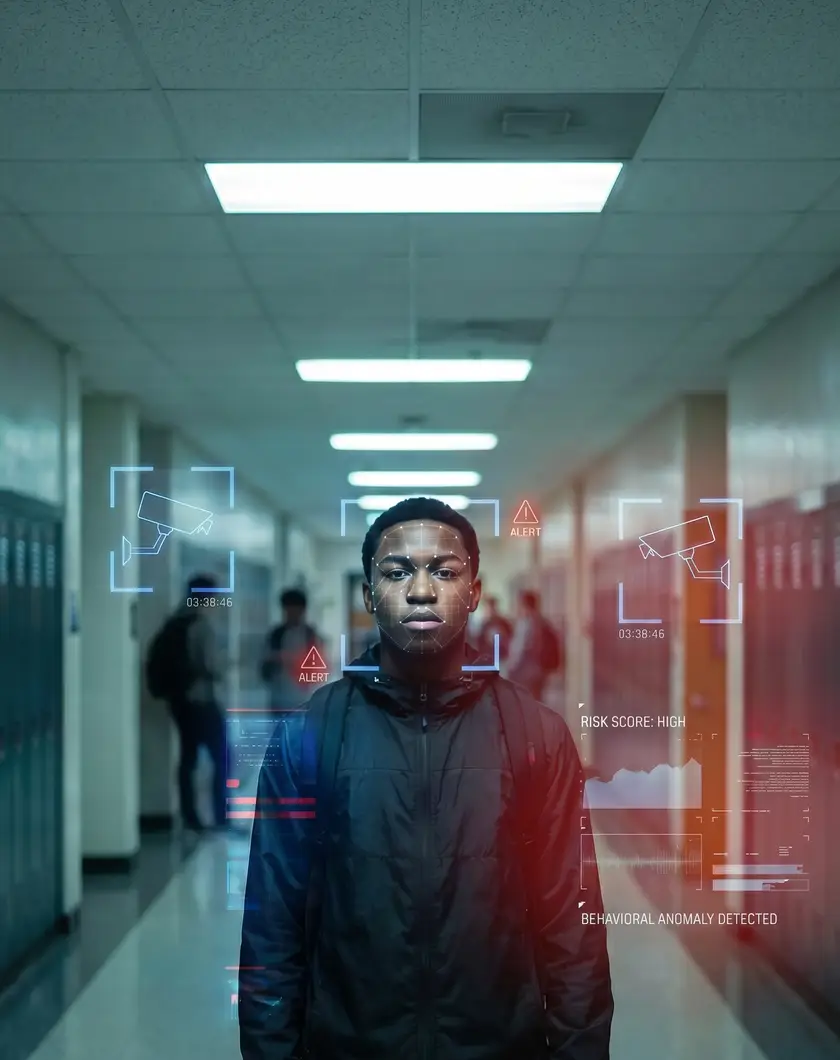
The bill names a hard truth: when schools use AI, automated decision systems, and surveillance technologies in discipline and safety contexts, those tools can amplify existing disparities and contribute to disproportionate monitoring and punishment of Black students.

Washington’s students, families, and educators are navigating a rapidly changing landscape where:

  • Technology is moving faster than policy. Tools are being adopted before communities have clear rules, transparency, or accountability.
  • Automated outputs can be treated like facts. Flags, classifications, and “alerts” can be mistaken for evidence instead of prompts for careful investigation.
  • Predictive labeling can harden bias. “Risk” predictions and watchlists can follow students and shape adult decisions, even when those labels are wrong or unchallengeable.
  • Surveillance can violate dignity and privacy. Biometric tools that claim to infer emotions, mental health, or identity characteristics cross a line that undermines trust and student well-being.

WhAT SB 5956 Does

We wrote SSB 5956 to prohibit the most harmful uses of AI and surveillance technologies in K-12 public schools, especially where the consequences include exclusion, discipline escalation, or law enforcement involvement

  • No automated discipline decisions. Automated decision systems cannot be the sole or determinative basis for discipline-related decisions.
  • No discipline escalation based only on predictions or surveillance data . Major actions like emergency removal, suspension/expulsion, alternative placement, or law enforcement referral must not be based solely on algorithmic outputs or surveillance data without independent investigation and context.
  • Ban on student “risk scores.” Districts cannot generate predictive risk classifications for individual students (misconduct, gang affiliation, targeted violence, future discipline problems).
  • Ban on automated watchlists. Districts cannot maintain internal watchlists of students designated as likely perpetrators based in whole or part on automated systems.
Key Facts
  • Origin conceived and drafted by BESR; institutional support staffed and advanced through community power.
  • SB 5956 applies to all Washington public‑school districts, charter schools and compact schools
  • The deadline for OSPI/WSSDA to publish the model policy (February 1, 2027).
  • SB 5956 does not ban AI in classrooms; it only restricts certain uses for discipline and surveillance.

Our Commitments

  • Centering Black students in how Washington's AI and surveillance guardrails are designed, implemented, and evaluated, challenging approaches that reproduce predictable inequities.
  • Protecting due process and human responsibility so no student's education is derailed by a score, flag, or classification that cannot be questioned or explained.
  • Advancing accountability through measurable goals, transparent data, and clear expectations for districts and vendors — so "black box" systems are never used to justify exclusion.
  • Protecting student dignity and privacy by opposing biometric profiling and facial recognition in schools, and limiting data-sharing practices that increase criminalization risk.
  • Strengthening cross-sector collaboration among students, families, educators, civil rights partners, and technology leaders so Washington's approach to Automated Decision Making Systems reflects both community wisdom and real safeguards.
  • Supporting sustainable systems change through equity-centered procurement, clear oversight, and ongoing community feedback.

FOR FAMILIES

Ask your school board, in writing, what AI, automated decision, surveillance systems your district currently uses, what data they collect on your student, and how those outputs factor into discipline, risk scores, and watchlist.  If your student is facing a discipline action, ask whether any automated flag or alert played a role, and ask for the independent investigation behind it. You have the right to an answer a human being can explain.


GET INVOLVED

  • Sign on to support SSB 5956 reintroduction in the next legislative session
  • Contact your legislators to oppose unregulated AI surveillance and automated decision-making in Washington schools
  • Ask your school board what AI and automated systems are currently used in your district and how they affect Black students
  • Partner with us if you are a civil rights organization, faith community, or technology stakeholder committed to equitable AI guardrails
  • Make a donation to fund BESR’s ongoing advocacy to protect Black students from algorithmic harm in Washington schools
 

Related Issues

For Black Students. At all Levels.

GET in Touch